
Air Conditioning Repair Services in Dallas
Dallas summers are hard on air conditioners. When yours stops cooling, call (469) 409-3818 for air conditioning repair in Dallas.
Describe what the AC is doing and ask about availability.
A good repair starts with finding the real cause, not just treating the symptom. Below are common air conditioner problems, the warning signs to watch for and what a typical repair visit looks like.
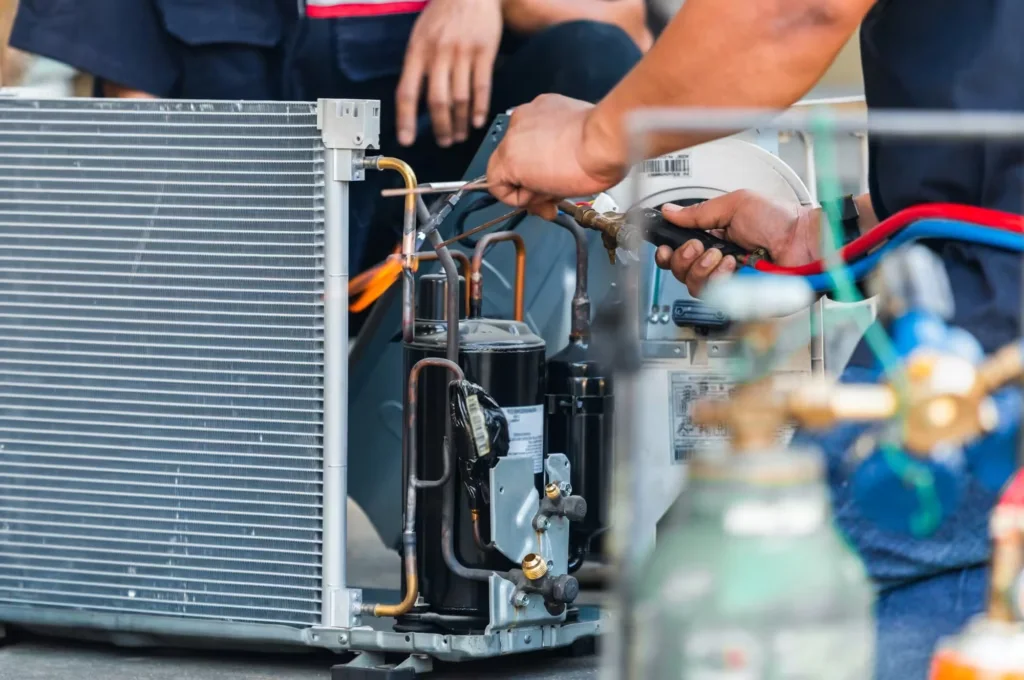
Common air conditioner problems
- Poor airflow
- Weak air from the vents can come from a clogged filter, duct problems or a failing blower fan. Airflow checks help get the system breathing properly again.
- Electrical control failures
- Parts that will not turn on, or a system that cycles on and off too often, often point to a failed electrical part or control.
- Refrigerant leaks
- Low refrigerant cuts cooling and can lead to compressor damage. A leak needs to be found and repaired, not just topped off.
- Compressor problems
- The compressor is the heart of the system. A technician can test it and explain whether repair or replacement makes more sense.
- Dirty condenser coil
- When the outdoor coil is caked with dirt and debris, the system cannot get rid of heat well and efficiency drops.
- Thermostat problems
- A thermostat that reads the wrong temperature makes the whole system run poorly. It may need new batteries, calibration or replacement.
- Tripped breakers or blown fuses
- A breaker that trips again and again is a sign of an electrical fault. Do not keep resetting it. Have the system checked.
When the AC runs but the air is warm
An AC that runs but blows warm or barely cool air can have several causes. A dirty filter or coil can choke airflow. A failed capacitor, contactor or fan motor can stop the outdoor unit from doing its part. A refrigerant leak can also cut cooling. From inside the house these often look the same, which is why a technician tests before naming the cause.
A few safe checks are worth a minute before you call:
- Make sure the thermostat is set to cool and set below the room temperature.
- Check the air filter and replace it if it is clogged.
- Notice whether the outdoor unit is running while the AC is on.
- If the AC breaker has tripped, mention it on the call. Do not keep resetting it.
Do not open the outdoor unit or touch wiring and capacitors. Some parts can hold a dangerous electrical charge even with the power off.
Ice on the lines or water on the floor
Ice on the copper lines or the indoor coil usually means air is not moving across the coil well or the refrigerant charge is off. Turn cooling off at the thermostat, let the ice melt and do not chip at it. Running an iced system can strain the compressor.
Water near the indoor unit usually comes from the condensate drain. In humid weather the AC pulls a lot of water out of the air, and that water must flow out through a drain line. A plugged drain can cause water damage and leave the house feeling damp. Keeping the drain clear is part of regular air conditioner maintenance.
Why Dallas summers expose AC problems
The National Weather Service notes that Dallas/Fort Worth daytime highs in July and August are consistently in the 90s and often reach 100. Gulf moisture keeps the air humid, and some nights stay above 80. An air conditioner in that weather may run most of the day and well into the night. A unit that limped along in May may stop keeping up in August. If the house is cool but still feels sticky, mention that on the call too.
Signs you need air conditioning repair
Calling early can save you from a complete breakdown and a bigger repair bill. Watch for these signs:
- The AC runs all the time but the house stays warm
- Grinding, squealing or banging from the indoor or outdoor unit
- Musty or burning smells from the vents
- Water or ice around the unit
- A sudden jump in the electric bill
- The system turns on and off every few minutes
- Weak airflow from the vents
- Some rooms much warmer than others
Staying safe while you wait
A house without cooling in a Dallas summer can become dangerous, especially for older adults, young children and anyone with a health condition. Heat safety guidance from the National Weather Service recommends air conditioned places such as libraries and malls. It also warns against pointing a fan at yourself when the room is hotter than 90°F, because the dry blowing air can dehydrate you faster.
- Go somewhere air conditioned if the house is getting too hot.
- Drink water regularly. If your doctor has limited your fluids, follow that guidance and ask before drinking more.
- Check on older, sick or frail people in the home.
- Call 911 if anyone is struggling in the heat.
What a professional diagnosis covers
A good diagnosis looks at the whole system, not just the part that seems broken. A technician typically checks:
- Thermostat settings and controls
- Electrical connections and motors
- Filter, blower and airflow
- Indoor and outdoor coils
- Refrigerant level and signs of leaks
- Condensate drain and pan
Refrigerant work has its own rules. Under Section 608 of the Clean Air Act, EPA rules require technician certification for anyone who services equipment that could release ozone depleting refrigerants. That is one more reason not to add refrigerant yourself.
What a typical repair visit looks like
- Inspection and diagnosis. The technician checks the whole system to find the root cause of the problem.
- Explanation and price. You should hear what is wrong, what needs to be done and what it will cost before any work begins.
- The repair. Once you approve the work, worn or failed parts are repaired or replaced.
- Testing. The system is run and checked for airflow, temperature and normal operation.
- Maintenance advice. Ask what filter schedule and maintenance will help prevent the same problem.
What affects the cost of AC repair
There is no honest single price for AC repair, because the cost depends on what failed. Common factors include:
- The part that failed and whether it is on hand
- How long it takes to find and fix the problem
- How easy the indoor and outdoor units are to reach
- Whether a refrigerant leak must be repaired before recharging
Repair or replace?
There is no set age when an air conditioner must be replaced. Some older systems are worth a modest repair, and some newer ones have costly problems. These factors usually matter more than age alone:
- The cost of this repair compared with replacement
- How often the system has needed repairs lately
- Whether a major part, like the compressor or a coil, has failed
- Whether the system still keeps the house comfortable on hot days
Ask the technician to explain both choices in plain terms, with a price for each, before you decide. If the same system also struggles in winter, the furnace and heating repair page covers that side.
Common questions about AC repair
How much does AC repair cost in Dallas?
It depends on what failed, the parts needed and how long the work takes. Ask how pricing works and whether there is a charge to diagnose the problem, and get the repair price before any work begins.
Why is my AC running but blowing warm air?
Common causes include a clogged filter, a dirty coil, a failed electrical part or a refrigerant leak. Check the thermostat setting and the filter first. If the air is still warm, call for a diagnosis.
What should I do if my AC is frozen?
Turn the cooling off at the thermostat and let the ice melt. Do not chip at it. Ice usually points to an airflow or refrigerant problem, so have the system checked before running it hard again.
Why is water leaking from my air conditioner?
Most indoor leaks come from a blocked condensate drain line or a damaged drain pan. If water is spreading, turn the system off at the thermostat and call so the drain can be cleared before floors or ceilings are damaged.
Can I add refrigerant to my AC myself?
No. Low refrigerant usually means a leak that needs to be found and fixed. EPA rules also require technician certification for servicing equipment that could release ozone depleting refrigerants.
Should I repair or replace my AC?
Age alone does not decide it. Compare the repair cost with replacement, and think about repair history, comfort and whether a major part like the compressor has failed. Ask for prices on both choices before you decide.
What should I do while I wait for AC repair?
Turn the cooling off if the unit is iced over, leaking or making loud noises. If the house gets too hot, go somewhere air conditioned, and do not rely on a fan pointed at you when it is hotter than 90°F indoors. Call 911 if anyone is struggling in the heat.
Call for air conditioning repair in Dallas
Describe what the AC is doing, when it started and anything you have seen or heard. Ask about availability.
Call (469) 409-3818